
What’s required to advertise travel price savings as “Save Up To $... / …%”?
Is it sufficient to advertise “From $...” when travel prices are subject to variations?
Two recent decisions lay down rules for travel price advertising to avoid being misleading so as to keep on the right side of the consumer law.
- The Australian decision of Australian Competition and Consumer Commission v Coles Supermarkets Australia Pty Ltd [2026] FCA 598 (14 May 2026) (Federal Court of Australia – O’Bryan J) lays down rules for advertising price savings.
- The UK ruling of UK ASA Ruling on TUI UK Ltd (28 January 2026) (Advertising Standards Authority Ltd.) lays down rules for advertising price variations.
The Coles Supermarkets decision
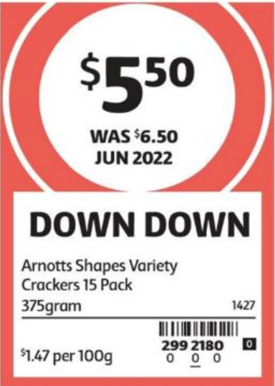
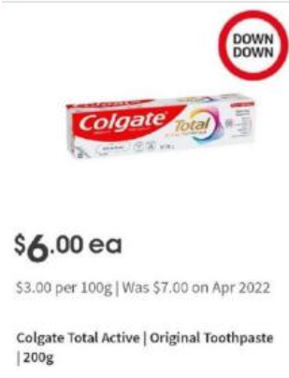
Coles offered customers price discounts on a range of commonly purchased products under the ‘Down Down’ promotions. Coles used ‘Was/Now’ pricing, where the ‘Down Down’ promotional price (the ‘Now’ price) was compared to an earlier higher price (the ‘Was’ price).
These are examples of signs and price tickets on shelf edges:
 |
 |
 |
The Australian Competition & Consumer Commission (ACCC) prosecuted Coles for misleading and deceptive conduct in breach of the Australian Consumer Law.
The ACCC alleged that the headline price was not a genuine discount to “the price at which that product was ordinarily offered for sale for a reasonable period prior to the promotion”.
Was there a genuine discount?
The Coles promotional strategy was to increase the price for a relatively short period of time (the ‘price spike period’) to establish the ‘Was’ price prior to discounting the price to the ‘Now’ price for the ‘Down Down’ promotion.
The ACCC alleged that the strategy was misleading and deceptive because the price increase was not justified and therefore there was no genuine discount.
The Court rejected the ACCC’s allegation, and found that:
“Coles did not select an artificially high ‘Was’ price for the sample products in order to increase the perceived discount on the Down Down ticket.”
The ‘Was’ prices were justified because they “resulted from supplier cost price increases …[and] Coles increased the prices in a commercially justifiable manner.”
Was the price spike period reasonable?
The Court examined how long the price spike period should last to establish the ‘Was’ price for a variety of ‘pantry’ products such as soft-drinks, dog food, biscuits, yogurt, toothpaste and tanning lotion.
The Court found that:
“The Down Down promotional mechanics required prices to remain stable for twelve weeks. The evidence indicates that Down Down prices were typically stable for much lengthier periods [for many products].”
The Court found that a minimum period of twelve weeks was a reasonable period for the ‘Was’ price for this reason:
“If an ordinary consumer were told that the product had been ordinarily sold by Coles at the ‘Was’ price for a period of twelve weeks immediately prior to the Down Down promotion, the consumer would believe that the Down Down price was a genuine discount to the ‘Was’ price.”
The Court concluded that the ‘Down Down’ promotion prices for some products were not genuine and were thereby misleading because the ‘Was’ period was less than twelve weeks for: soft drinks (6 weeks), dog food, yogurt, toothpaste (28 days), and biscuits (21 days).
The Court added that it was satisfied that:
“The sample products were offered for sale at the ‘Was’ price in the ordinary course of Coles’ business and the sample products were sold in commercial volumes at the ‘Was’ price.”
The ACCC guide to Price Displays
The ACCC guide states that a displayed price can be misleading if:
- Stating the sale price is marked down from an earlier price when:
- the items were not sold at that price for a reasonable period right before the sale started, or
- only a very small proportion of items were sold at that price right before the sale.
- Comparing the displayed price with the wrong cost or wholesale price.
- Comparing the displayed price to a recommended retail price (RRP) that the product was never sold at, or wasn’t sold at for, a reasonable period right before the sale started.
- Advertising a price that is not the total price the consumer will have to pay.
- Promoting a price as being a sale or special price, when it is actually the normal price.
- Where an item is offered at a sale or special price for an extended period of time, it may be misleading to call it a sale or special price, as the price has effectively become the new selling price.
The UK TUI Ruling
Holiday companies in the UK, such as TUI, adjust their prices regularly in line with price changes by their suppliers (particularly airlines). This is known as dynamic pricing.
In a recent ASA determination of a complaint against TUI, the ASA stated the importance of using ‘from’ to describe prices advertised where dynamic pricing is used:
“The ASA considered that consumers would understand the claims “£1248.13pp” and “Total Price £2496.26” on 2 July 2025 to be the actual price payable for the Caesars Palace Las Vegas holiday and they were available at the time they saw the listing. [The impression given was] that the advertised price was a static offer that represented a price saving compared to the normal cost of the holiday.
However, when the complainant attempted to book the holiday online, the price of the holiday increased by over £700. On this booking page, they were informed the price increase was due to an increase in flight costs provided by a third party.”
“Marketers should ensure that prices that were subject to change were described as “from” prices and make clear in their advertising the date of the last price update. Because flight price data was not updated on the TUI website in real time, we expected their marketing communications to make clear when the last price update was, and that the price featured was liable to change. However, that information was not included in the ads.”
“While we noted that the page included the qualification “Price may update at checkout based on availability” we considered that in the absence of a “from” price indication and the time of the last update, it was insufficient to counter the overall impression of the ad.”
“We told them to take steps to reduce the likelihood of consumers being misled, for example, by describing prices that were subject to change as “from” prices and stating when those prices were last updated.”
Comment
There is no specific advice given by the ACCC about displaying dynamic prices other than to caution against making false or misleading claims.
“Surge or dynamic pricing
Surge or dynamic pricing is when businesses increase their prices during periods of high demand. For example, ride-share companies may increase their prices when there are many people wanting rides and not enough available drivers.
Surge or dynamic pricing is not illegal, but businesses must be clear about the price consumers will pay. They must also not make false or misleading claims about their prices.”
Airline and hospitality business are comparable to ‘ride-share’ providers, able to adjust rates based on occupancy, seasonality, and how close it is to a booking date.
The UK advisory - to insert the word ‘From’ before the advertised price and to display when the price was last updated price should be followed.
Placing an asterisk next to the advertised price linked to Terms and Conditions is not a sure-fire way to avoid being misleading.
The ACCC prosecuted Webjet and the Court fined Webjet $9 million because social media posts showing flights advertised as “from $XX”* were misleading. See my article The dangers in using asterisk pricing to lure in customers.